
HOW TO DISTINGUISH ARABICA AND ROBUSTA COFFEE BEANS - WHICH ONE IS YOUR "TRUE LOVE"?

Coffee has long been a familiar morning drink for young people, as it helps with alertness and focus. Among coffee varieties, Arabica and Robusta are the two most popular main lines, with distinct differences in flavor, cultivation, and nutritional value. Do you know how to distinguish these two types yet? If not, in this article, Safe King (Vua An Toàn) will help you gain a deeper understanding of how to differentiate Arabica and Robusta coffee, while exploring the factors that influence their flavor and quality.
>> ALL COFFEE PRODUCTS FROM SAFE KING
>> PREMIUM PHIN FILTER COFFEE
I. INTRODUCTION TO ARABICA AND ROBUSTA COFFEE

Arabica and Robusta coffee bean products manufactured by Safe King
1.1 Arabica Coffee – The “Queen” of Flavor
Arabica coffee (Coffea Arabica) is primarily grown in highland regions and originates from the Ethiopian highlands. This is the most popular coffee type in the world, accounting for approximately 60-70% of total global coffee production.
Outstanding characteristics of Arabica coffee:
-
Flavor: The flavor of Arabica is very delicate and rich, often featuring aromas of fruit, flowers, chocolate, or nuts.
-
Caffeine content: Arabica has a lower caffeine content, accounting for only about 1.5% compared to Robusta. Therefore, its flavor is gentler and not harshly bitter.
-
Bean shape: Arabica beans are oval-shaped with a curved center cut.
-
Cultivation conditions: Arabica coffee is suitable for cool climates, typically grown at altitudes from 1,200 to 2,200 meters above sea level.
You can refer to Safe King's coffee products at:
>> PREMIUM COFFEE BEANS
>> PREMIUM EU COFFEE BEANS
1.2 Robusta Coffee – Strength and Boldness
Robusta coffee (Coffea Canephora) is commonly grown in tropical climate regions, especially in Vietnam. This coffee type accounts for about 30-40% of total world coffee production and usually has a lower price point compared to Arabica.
Outstanding characteristics of Robusta coffee:
-
Flavor: Robusta has a characteristic bitter, bold taste, sometimes slightly harsh with a nutty aftertaste.
-
Caffeine content: Robusta has a higher caffeine content, around 2.7%, providing a more intense bitterness and a stronger sense of alertness when enjoyed.
-
Bean shape: Robusta beans are round, smaller, and have a straight center cut.
-
Cultivation conditions: Robusta can be grown at lower altitudes, from 0 to 600 meters, and can withstand harsher conditions than Arabica.
>> TRADITIONAL COFFEE
II. DISTINGUISHING ARABICA AND ROBUSTA COFFEE
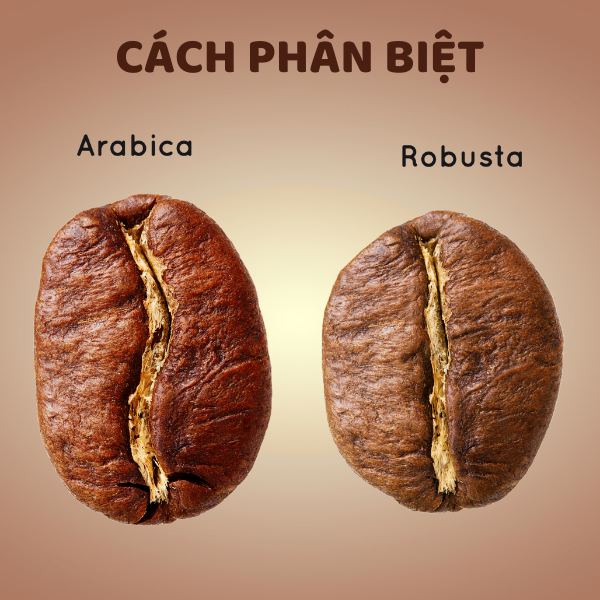
How to distinguish Arabica and Robusta coffee beans
Arabica and Robusta are the two most popular types of coffee in Vietnam. Each type has its own characteristics regarding flavor, bean shape, cultivation method, and suitable audience. Below are the basic points of distinction between these two types of coffee.
2.1 Flavor
-
Arabica: The flavor of Arabica coffee is diverse and delicate, with a blend of mild acidity and fruity or floral aromas. When consumed, Arabica creates a gentle, delicious, and pleasant sensation.
-
Robusta: The flavor of Robusta is bold and powerful, with a clear bitterness; the aftertaste often leaves an astringent feeling and a hint of nuttiness.
2.2 Caffeine Content
-
Arabica: Contains only about 1.5% caffeine, suitable for those who prefer gentle, less bitter coffee for relaxation and enjoyment.
-
Robusta: Has a higher caffeine content (2.7%), suitable for those who need high alertness, drinking to "wake up" the spirit and increase work energy.
2.3 Price
-
Arabica: Higher price due to more complex cultivation and harvesting processes. Arabica beans require better natural conditions and meticulous care.
-
Robusta: Lower price because the trees are easy to grow, yield is high, and they require less care compared to Arabica.
2.4 Bean Shape
-
Arabica: Oval beans, curved center groove.
-
Robusta: Small, round beans, straight center groove.
III. WHO IS SUITABLE FOR ARABICA AND ROBUSTA COFFEE?

Who is suitable for Arabica and Robusta coffee?
Arabica and Robusta coffee both have different flavors and characteristics, so each type of coffee will suit different individuals based on personal preference and needs.
3.1 Who is Arabica Coffee Suitable For?
-
Those who love gentle, elegant flavors: If you are someone who enjoys coffee to experience delicate, delicious flavors that are not too bitter, Arabica is the perfect choice.
-
Flavor explorers: With its richness and diversity in flavor, from fruity to floral notes, Arabica coffee is suitable for those who want to experience variety in every sip.
-
Caffeine-sensitive individuals: With its low caffeine content, Arabica is suitable for those who love enjoying coffee but do not want to be overly affected by caffeine.
-
Machine-brewed coffee enthusiasts: Arabica is often used in machine-brewed coffees like Espresso or Latte, offering smoothness and complex flavors.
3.2 Who is Robusta Coffee Suitable For?
-
Those who like strong, bitter coffee: If you are a lover of intense bitterness and a powerful sensation when drinking coffee, Robusta is an unmissable choice.
-
People who need alertness for work: With its high caffeine content, Robusta is a drink that helps you stay alert and have enough energy to start a long and productive workday.
-
Budget-conscious coffee drinkers: Robusta is generally cheaper than Arabica, making it suitable for those who want to drink coffee every day without worrying about the cost.
-
Vietnamese coffee lovers: Robusta is commonly used in traditional Vietnamese phin filter coffee, providing a characteristic bold and aromatic taste.
You can refer to Safe King's coffee products at:
>> ALL COFFEE PRODUCTS FROM SAFE KING
IV. APPLICATIONS OF ARABICA AND ROBUSTA COFFEE IN MIXOLOGY
Applications of Arabica and Robusta coffee in mixology

Arabica and Robusta coffee have different flavor profiles and properties, so they are used in mixology for different purposes to create special beverages. Below are the common applications of these two types of coffee in mixology.
4.1 Arabica Coffee
4.1.1 Brewing Espresso
-
Arabica coffee is often preferred in high-end espresso brewing because of its gentle, delicate, and complex flavor. Medium-roasted or dark-roasted Arabica beans will provide an espresso cup with a rich aroma, elegant acidity, and a long-lasting sweet aftertaste.
-
Using Arabica to create espresso is popular in high-end coffee chains or specialty coffee shops.
4.1.2 Cappuccino and Latte
-
With its mild acidity and complex aroma, Arabica is the perfect choice for making Cappuccino or Latte. When combined with milk, the sweetness of the milk blends with the gentle aroma and clean taste of Arabica, creating a soft, balanced milk coffee between coffee flavor and milk richness.
4.1.3 Cold Brew and Iced Coffee
-
Arabica coffee, with its low bitterness, clean acidity, and mild sweetness, is very suitable for making Cold Brew or Iced Coffee. These methods highlight the freshness and delicate flavor of the coffee without being overwhelmed by bitterness like Robusta.
-
With Cold Brew, Arabica provides a refreshing, gentle experience, suitable for summer days.
4.1.4 Specialty Coffee
-
Arabica coffee has many rich flavors ranging from fruit, flowers, honey, and caramel, so it is widely used in coffee shops specializing in specialty coffee. High-quality Arabica varieties are brewed using manual methods like pour-over or AeroPress to highlight complex and delicate flavor layers.
4.2 Robusta Coffee
4.2.1 Brewing Traditional Phin Filter Coffee
Robusta coffee is the top choice for traditional Vietnamese phin filter brewing due to its boldness, strong bitterness, and intense flavor. Vietnamese people prefer phin coffee with a harsh bitterness and thick consistency, and Robusta provides exactly that. When combined with condensed milk to make iced milk coffee (cà phê sữa đá), the powerful flavor of Robusta blends with the condensed milk, creating a rich and creamy drink that still retains its characteristic bitterness.
4.2.2 Brewing Bold Espresso
Although Arabica is preferred for espresso, many baristas like to brew an espresso blend of Arabica and Robusta to create more distinct strength and bitterness. Robusta in espresso helps increase body and creates a thick crema, characteristic of a cup of espresso.
4.2.3 Instant Coffee
Robusta is the main ingredient in instant coffee production thanks to its lower cost and bold flavor. With high caffeine content, Robusta provides drinkers with a powerful experience, helping them stay alert instantly. In particular, the strong bitter flavor of Robusta is the factor that helps instant coffee achieve the expected bold taste.
4.2.4 Brewing Blended Ice Coffee (Frappuccino)
Robusta coffee is often used in Frappuccinos or blended ice coffees because of its strength. The intense bitterness of Robusta balances out sweet ingredients like cream, syrup, or milk, creating a drink that is both cold and has a clear coffee flavor.
BUY AUTHENTIC MIXOLOGY INGREDIENTS
Whichever type of coffee you choose, always remember to select quality mixology ingredients from reputable sources. You can find authentic mixology ingredients at Safe King (Vua An Toàn). We have over 10 years of service in the mixology ingredient supply industry.
We have physical stores where you can come to shop. Safe King will research and provide you with detailed advice on ingredients - machinery - tools for mixology that suit your needs.
- 07 Nguyen Duc Thuan, Ward 13, Tan Binh District, Ho Chi Minh City
- No. 28 Phan Dinh Giot, Phuong Liet Ward, Thanh Xuan District, Hanoi
- 65 Nguyen De, An Hoa Ward, Ninh Kieu District, Can Tho City
- 104 Ly Thai Tong, Thanh Khe Tay Ward, Thanh Khe District, Da Nang City