TAT TAN TAT VE CAC LOAI Juice COT Tea DUNG DE PHA Tea Milk THONG DUNG

01-11-2021Business Guide
Master essential business strategies and practical management insights for TAT TAN TAT VE CAC LOAI NUOC COT TRA DUNG DE PHA TRA SUA THONG DUNG. Exclusive guide by Safe King consulting team.
WHAT MAKES EACH TYPE OF TEA BODY DIFFERENT?
There are many factors that make different types of tea: tea varieties, growing methods, oxidation process, drying.
The oxidation process of tea is the most important step, this is the measure to classify teas. Oxidation is the process in which enzymes in tea leaves interact with oxygen in the air when tea leaf cells are broken down. The more oxidized the tea, the darker the color. From one tea tree, people can make many different types of tea based on the degree of oxidation of the tea leaves. Oxidation levels from 0% to 100% cause each type of tea to have a different color and flavor.

Each type of tea, when going through a different oxidation process, will produce different colors and flavors of tea
1.GREEN TEA
Green tea, also known as green tea, is a type of tea that does not undergo oxidation like black tea and oolong tea. Green tea is processed immediately after picking tea leaves, going through only 4 stages: picking tea, withering, crushing tea and drying. The important processing technique here is to use heat to prevent oxidation. Green tea is processed using both manual and modern methods. Drying in the sun, drying in a pan, and using charcoal are common manual methods. Drying in the oven, rotisserie or steaming are popular modern methods. The above tea production process helps preserve green tea.
Green tea has many different shapes: long pointed leaves, flat leaves, twisted leaves, rolled balls... the color is usually gray green, dark green, light yellowish green, but when mixed into water, the tea leaves give a beautiful green color, the tea water is also yellow green, with a slightly acrid fresh taste. Green tea essence is suitable for making fruit teas, green tea with cheese cream... from this type of tea.
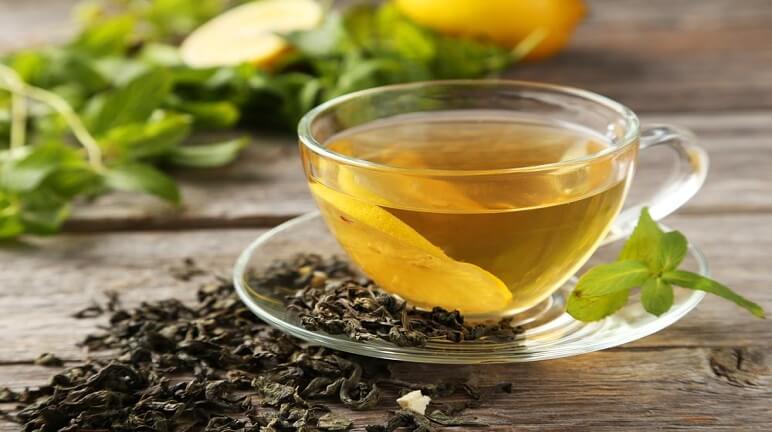
Green tea is light green and slightly yellowish
2. HONG TRA
Black tea is also known as black tea. Because the tea leaves in black tea are 100% oxidized, the tea leaves are black, so it is called black tea. However, after steeping the tea, the tea has a pink or red-brown color, so it is called "pink tea". The way to call black tea is popular in Western countries. Meanwhile, in Asian countries in general, the name black tea is still the most common.
To produce black tea, young tea leaves are harvested and 100% completely oxidized at high temperatures. After processing, the tea leaves have a dark, dark brown color close to black and carry a strong tea aroma and characteristic strong tea taste. While green tea only retains its fragrance for 1 year, black tea retains its aroma for many years. The dark brown color of black tea mixed with milk will become the characteristic light brown color of milk tea. Black tea base is a popular type of tea base in making milk tea, familiar types of milk tea: milk foam black tea, effervescent black tea, pearl black tea...

Black tea has a reddish brown color and strong aromatic flavor
3. Earl Gray Black Tea
The name of this tea is named after Earl Charles Gray the second, the British Prime Minister in the period 1830 - 1834.According to legend, Charles Gray added Bergamot fruit essence originating from the Mediterranean to tea, creating a luxurious, attractive aroma. The combination of black tea and Bergamot fruit essence also creates a mental and health balancing effect for the drinker.
The color of the tea base is slightly lighter brown than black tea. When mixed with milk, it will create a unique aroma.

The color of the tea base is slightly lighter brown than black tea. When mixed with milk, it will create a unique aroma.
Earl gray tea has a lighter color than the black tea
4. OLONG TEA
Oolong tea is collectively known as "thanh tea" which is a large group of teas that are fermented from about 8% to 80%. This level of oxidation is reflected in the color of the tea leaves as well as the color of the brewed tea from green to yellow, amber, and reddish brown.
The flavor of Oolong tea varies greatly between variant varieties. It can be sweet and fruity with honey scents, or woody and thick with roasted scents, or green and fresh with bouquet scents, all depending on the vegetable and style of production.
Oolong tea is shaped by rolling into round balls, each round ball is a tea bud. Because of this, when Oolong tea is steeped, the leaves will expand from that round ball, you will feel like your tea pot changes and in the end almost the tea pot will be covered with tea leaves.
During processing, Oolong tea has variations such as:
– Milk Oolong tea: this is a type of Oolong tea that is fertilized and supplemented with beans, seeds such as soybeans, etc. so that the Oolong tea then has a sweet, greasy, aromatic taste.
– Roasted Oolong tea: When enjoying roasted Oolong tea, it has a light, aromatic aroma that blends in with the tea aroma. This creates a unique character and flavor for this Oolong tea. This is the main type used to make milk tea base. When mixed with milk, Oolong tea produces a light green color and a characteristic mild, fragrant taste. The aftertaste of Oolong tea is rich, so this is the favorite tea base for those who want to enjoy a cup of rich milk tea.

Oolong tea water is usually yellow, reddish brown... depending on the degree of oxidation
WISH YOU YOUR BILLING SUCCESS!
Hotline: 098 701 3502_.
Zalo shop: SAFE MILK TEA INGREDIENTS
Fanpage_: @safeking.vn_